

Photo by Content Pixie on Unsplash
If you've been feeling mentally overwhelmed, emotionally stretched, or a little disconnected from yourself, you might be craving something simple: a moment to hear your own thoughts without interruption.
I see you. And I want to remind you that reconnecting with yourself doesn't have to begin with a complete wellness overhaul. Sometimes, it begins with a notebook, your favorite pen, and a few honest words.
For as long as I can remember, writing has been my sanctuary. As a little girl, I was rarely without a notepad and pen. Home videos show me scribbling stories, dreams, and thoughts that felt too big to hold inside. It was never about perfection. It was about connection.
As I grew older, journaling became less about documenting my life and more about finding my way home to myself. Life became fuller with work, family, responsibilities, and all the beautiful complexities of womanhood. And, naturally, my journaling practice sometimes slipped away.
But every time I returned to it, I rediscovered something meaningful: a little more clarity, a place to process my feelings, and an opportunity to reconnect with the person beneath all the daily roles I play.
That's the beauty of journaling for self-care. It simply invites you to spend a little time with the person you are.
What Is Journaling for Self-Care?
Journaling for self-care is the practice of using writing as a way to reflect, explore your thoughts, express emotions, and become more intentional about your well-being.
Unlike traditional diary writing, which often focuses on recording daily events, mindful journaling can be more personal and reflective. You might write about something that made you happy, a feeling you haven't quite understood, a goal you're working toward, or something you're ready to release. There is no required format.
Your journal can be filled with gratitude lists, affirmations, questions, messy paragraphs, dreams, plans, or even a single sentence. It's not meant to be polished or performative. It's a private space where you can let your thoughts unfold without worrying about how they sound to someone else.
And perhaps that's what makes it so special: you get to show up exactly as you are.
7 Benefits of Journaling for Your Mental and Emotional Well-Being
Journaling is a simple, accessible self-care practice that can support self-awareness and emotional reflection. Here are seven ways journaling may support your everyday well-being.
1. It Gives Your Thoughts Somewhere to Go
Sometimes, the hardest part of feeling overwhelmed is trying to hold every thought in your head at once. Writing things down can help you organize what's on your mind, identify recurring concerns, and create a little distance between yourself and your thoughts.
Instead of trying to solve everything immediately, you can begin by asking:
What has been taking up the most space in my mind lately?
You don't need to find an answer right away. Simply acknowledging what's there can be a meaningful first step.
2. It Encourages Emotional Awareness
Not every emotion arrives with a clear explanation. Sometimes you feel frustrated, disappointed, excited, or unsettled without immediately understanding why. Journaling gives you an opportunity to explore those feelings with curiosity rather than judgment.
Try completing this sentence:
Right now, I'm feeling… and I think it might be because…
You may discover patterns, recognize unmet needs, or simply find words for an experience that previously felt difficult to explain.
3. It Can Help You Manage Stress
For some people, putting difficult experiences into words can make them feel easier to examine.
That doesn't mean journaling will eliminate stress or resolve every challenge. It can, however, give you a structured opportunity to pause, reflect, and decide what needs your attention.
If writing about something feels too intense, you can switch to a lighter prompt, take a break, or return another day. Your well-being comes before completing a journal entry.
4. It Strengthens Self-Awareness
The more often you make space for honest reflection, the more opportunities you have to notice your patterns, values, preferences, and changing needs. You might begin to recognize what energizes you, what leaves you feeling depleted, or which boundaries deserve more attention.
Over time, these observations can help you make choices that feel more aligned with the life you want to create.
5. It Creates Space for Gratitude
Gratitude journaling encourages you to notice moments of appreciation in your everyday life. And no, you don't have to pretend everything is wonderful to practice gratitude.
You can acknowledge a difficult day while still appreciating the friend who checked in, the quiet morning coffee, a moment of laughter, or the way you showed up for yourself. For more inspiration, explore our article on the benefits of gratitude.
6. It Helps You Reconnect With Your Goals and Values
Life can become so full of responsibilities that your personal goals slowly move to the bottom of the list. Journaling offers a place to revisit what matters to you.
You can reflect on your ambitions, explore what success means in your current season, and identify small steps that feel realistic.
Try asking:
What am I making time for that genuinely matters to me?
What would I love to experience more of?
Is there something I've outgrown?
What is one thing I want to prioritize this month?
Your answers don't have to stay the same forever. You're allowed to evolve.
7. It Supports a More Intentional Relationship With Yourself
Perhaps one of the most meaningful benefits of journaling is the opportunity to practice listening to yourself. When you regularly create space for reflection, you give yourself a chance to notice what you need. You begin to ask better questions, recognize your limits, and make room for your own perspective.
Self-care isn't always about doing more. Sometimes, it's about becoming more attentive to what is already happening within you.
5 Simple Journaling Techniques to Try
If you're new to journaling, you might be wondering where to begin. The good news? There isn't one correct way to do it. You can experiment with different journaling techniques and discover what feels most supportive.
Here are five easy practices to get you started.
1. Gratitude Journaling
Gratitude journaling is a simple way to reflect on the moments, people, and experiences you appreciate. At the end of the day, write down three things you're grateful for. They don't need to be extraordinary.
You might include:
A conversation that made you smile.
A meal you enjoyed.
A moment when you felt proud of yourself.
Something beautiful you noticed during your day.
A challenge that taught you something.
2. Affirmation Journaling
Affirmation journaling involves writing supportive statements that reflect the mindset or qualities you want to nurture. The goal isn't to force yourself to believe something that feels untrue. Choose words that feel encouraging, realistic, and meaningful to you.
Here are a few affirmations to begin with:
I am allowed to grow at my own pace.
I can honor my needs without feeling guilty.
I am worthy of rest, care, and kindness.
I trust myself to take the next small step.
I am making room for a life that feels aligned with me.
You can revisit the same affirmation throughout the week or create new ones as your needs change. For more inspiration, read our article on affirmations for elevated living.
3. Manifestation Journaling
Manifestation journaling is a reflective practice in which you write about the experiences, goals, and feelings you'd like to invite into your life. You might describe your ideal morning, the kind of relationships you want to nurture, or what a fulfilling career looks like to you.
Try these prompts:
What does my most fulfilling life look and feel like?
What opportunities am I ready to explore?
What would I do if I trusted myself a little more?
What small action can I take toward something I want?
You can write in the present tense if that helps you visualize your intentions, but remember that writing about a goal doesn't guarantee an outcome. Pair your vision with practical steps that feel right for you.
4. Stream-of-Consciousness Journaling
This is one of my favorite ways to journal because it takes the pressure off.
Set a timer for five minutes and write whatever comes to mind. Don't worry about grammar, spelling, structure, or whether your thoughts make sense.
You can begin with:
What's on my mind right now is…
Keep writing until the timer ends, or stop whenever you feel ready. If a thought feels too personal or overwhelming to explore, you can change direction. You are always in control of what you choose to write about.
5. Evening Reflection Journaling
An evening reflection can help you create a gentle transition between the busyness of your day and your time to rest.
Before bed, consider writing about:
Something that went well today.
Something that challenged you.
A moment when you felt connected to yourself.
Something you'd like to release or revisit tomorrow.
One thing you're looking forward to.
You don't need to write a full page. A few honest sentences are enough.
Creating a Mindful Journaling Routine
The secret to building a sustainable journaling practice isn't writing every day without fail. It's creating a routine that feels inviting enough to return to.
I like to keep my journal close by, especially on my nightstand, as a little invitation to unwind before bed. Having it within reach makes it easier to create a few quiet minutes for reflection.
Some nights, the words flow easily. Other nights, they don't. Both are okay. Here's how you can create a mindful journaling routine that works with your life.
1. Choose a Time That Feels Natural
You might enjoy journaling in the morning before checking your phone, during a quiet lunch break, or in the evening before bed. Experiment with different times and notice which one feels easiest to maintain.
2. Create a Space You Enjoy Returning To
Your environment can help make journaling feel like a meaningful ritual rather than another task on your list.
Find a comfortable spot, bring your journal and favorite pen, and add little details that make the experience feel special. Perhaps it's a soft blanket, a candle, a cup of tea, or your favorite calming playlist.
At svg., we believe the spaces we create can encourage us to slow down and reconnect with ourselves.
Create Your Sacred Space With the Cápsula Wellness Mat
The Cápsula Wellness Mat can become a beautiful foundation for your personal self-care space with its capsule-shaped silhouette.
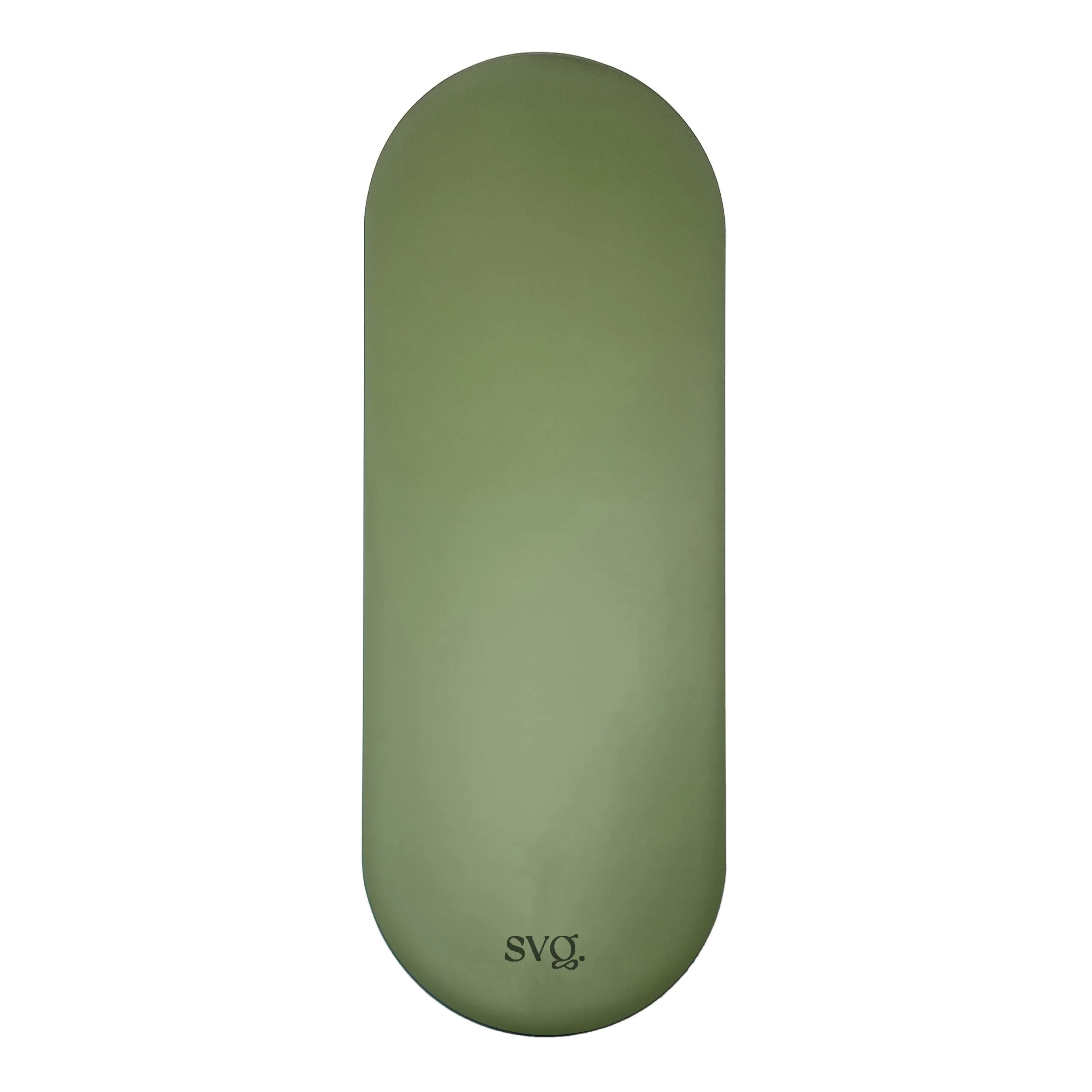
A Wellness Mat Designed for Everyday Rituals
★★★★★ [Best Seller]
Description:
Invite balance and renewal into your practice. The Oliva Verde Cápsula Mat is a calming olive green shade that reflects nature, harmony, and fresh energy. It grounds you in mindfulness while inspiring growth. Designed for yoga, recovery, strength training, and meditation, this premium non-slip mat delivers comfort, stability, and eco-inspired elegance to every practice.
Specs That Matter
Dimensions: 185 cm x 68 cm
Thickness: 4 mm
Weight: 7 lbs
Try unrolling your mat in a quiet corner and creating a little journaling sanctuary. Bring your notebook, a comfortable cushion, and your favorite beverage. Settle in, take a few natural breaths, and give yourself permission to be present.
Your sacred-space journaling ritual:
Prepare your space: Unroll your Cápsula Wellness Mat and gather your journal, pen, and anything else that makes the space feel inviting.
Pause and arrive: Sit comfortably and take a moment to notice how you're feeling.
Choose a prompt: Ask yourself, “What do I need to give myself permission to feel today?”
Write without pressure: Let your thoughts unfold naturally. You don't need to edit, explain, or make them sound beautiful.
Close with intention: Write one small act of care you'd like to offer yourself today.
Your mat can be part of this ritual, or you can simply use whatever comfortable space you already have. The important thing is creating a moment that feels like yours.
3. Keep Your Practice Simple
You don't need to fill three pages every morning or write a detailed account of your day. Start with five minutes, one prompt, or three sentences.
A simple practice is often easier to return to than one built around expectations you can't realistically maintain.
4. Let Your Practice Evolve
Some seasons might call for gratitude lists. Others might invite deeper reflection, goal-setting, or a few unfiltered pages.
Allow your journaling practice to change with you. And if you miss a few days (or a few months), you haven't failed. Your journal will still be there when you're ready.
How to Make Journaling a Habit Without the Pressure
If you want to journal more consistently, try making the practice easier to begin rather than demanding more discipline from yourself.
Here are a few gentle ways to build a routine:
Keep your journal visible: Place it somewhere you naturally spend time.
Connect it to an existing ritual: Journal after your morning coffee or before your evening skincare routine.
Use a small starting point: Commit to one sentence rather than a full page.
Choose prompts ahead of time: Keep a list so you don't have to think of something to write.
Celebrate returning: If you take a break, welcome yourself back without guilt.
Remember, consistency doesn't mean perfection. A sustainable wellness practice should support your life, not become another source of pressure.
Write to Remember Who You Are
Journaling has taught me that writing isn't about creating something perfect. It's about creating space for my emotions, my inner voice, and my quiet strengths to rise.
Whether you're navigating a new chapter, rediscovering an old passion, or simply looking for a few moments of peace, you don't need to wait for the perfect time to begin.
Start with one page. One honest thought. One moment of stillness.
This Article Has Been Updated.
*Gentle Reminder
The content shared in this article is intended for educational and informational purposes only. It is designed to inspire mindful living and support your personal wellness journey, but it is not intended to replace medical advice, diagnosis, treatment, or personalized guidance from a licensed healthcare professional.
At SVG Living, LLC ("svg."), we believe in honoring the individuality of every woman's wellness journey. The experiences, perspectives, and practices shared here reflect the author's views and are not intended as medical advice. Any products, services, or wellness practices mentioned are shared for informational purposes and should be considered in the context of your individual needs.
Always listen to your body, honor your personal boundaries, and consult a qualified healthcare professional with any medical questions or concerns. You deserve support that is appropriate for you and your unique circumstances.
Thank you for being part of the svg. community. 🤍