
How to Stay Motivated in Your Yoga Practice: Tips for the Busy Woman

Photo by Content Pixie on Unsplash
If you've been feeling disconnected from your practice, struggling to find motivation, or quietly feeling guilty about the days you don't roll out your mat, take a breath. You're not doing wellness wrong.
Sometimes you genuinely want to move your body and find a little stillness, but your energy is low, your mind is full, and adding one more thing to your day feels like too much. I get it.
As a seasoned yoga practitioner, a 200-hour certified yoga instructor, and a mom, I've experienced the tension between knowing how much I value my practice and struggling to make space for it. Some days, the laundry wins. Other days, errands, work, family, or simple exhaustion take priority. However, that doesn't erase the relationship I've built with my practice.
After more than a decade of practicing and teaching, I've learned that staying motivated in yoga isn't about forcing yourself to show up perfectly. It's about creating a practice you can return to with kindness.
Whether you've been practicing for years or are just beginning to explore yoga, these tips can help you build a more realistic, enjoyable, and sustainable ritual. A ritual that supports the life you're living right now.
Here are a few of my favorite ways to keep your practice consistent and inspiring:
Why Is It So Hard to Stay Motivated in Yoga?
Yoga can be a meaningful part of your self-care routine, but knowing it is good for you doesn't mean you'll always feel motivated to do it.
Even practices you enjoy can feel like an obligation when you’re balancing work, school, family, relationships, personal goals, and the mental load of everyday life.
You might experience:
Decision fatigue: You've made so many decisions throughout the day that choosing a yoga practice feels like one more.
Unrealistic expectations: You believe a practice only counts if you have 45 minutes, the perfect space, and enough energy for a full flow.
All-or-nothing thinking: If you can't attend a class or complete your usual routine, you decide to skip the practice entirely.
Guilt about missed sessions: You start treating rest days or interrupted routines as evidence that you're not committed enough.
Changing needs: The practice that felt supportive in one season may not fit your current energy, schedule, or priorities.
If any of this sounds familiar, you don't need to respond by becoming more disciplined with yourself. You might simply need a gentler approach.
Your practice is meant to support your life, not become another source of pressure.
5 Tips to Stay Motivated in Your Yoga Practice
The goal here isn't to make yourself want to practice every single day. It's to remove some of the friction that makes returning to yoga feel difficult.
Start with the strategies that feel realistic for you. You can experiment, adjust, and leave behind anything that doesn't serve your current season.
1. Create a Space You'll Love
Let's start with your environment. Have you ever intended to practice yoga, only to spend ten minutes moving laundry, looking for your blocks, and deciding where you can fit your mat?
Sometimes, the hardest part of starting is everything that comes before the first breath.
Creating a dedicated yoga space can make it easier to begin. And no, you don't need a spare room, a designer studio, or an entire Pinterest-worthy wellness corner. A small, inviting area can be more than enough.
Try a few simple touches:
Keep your yoga mat somewhere accessible.
Place your blocks, strap, or other essentials in a small basket.
Add a plant or another object that makes the space feel calming.
Use soft lighting if you enjoy practicing in the morning or evening.
Keep the area simple enough that you don't have to spend time preparing it.
The goal isn't to create a perfect aesthetic. It's to make your practice feel welcoming and easy to begin.
Feature: The Cápsula Wellness Mat
Your mat can be part of that invitation. The Cápsula Wellness Mat is svg.'s featured wellness essential for creating a dedicated space for mindful movement and everyday rituals.
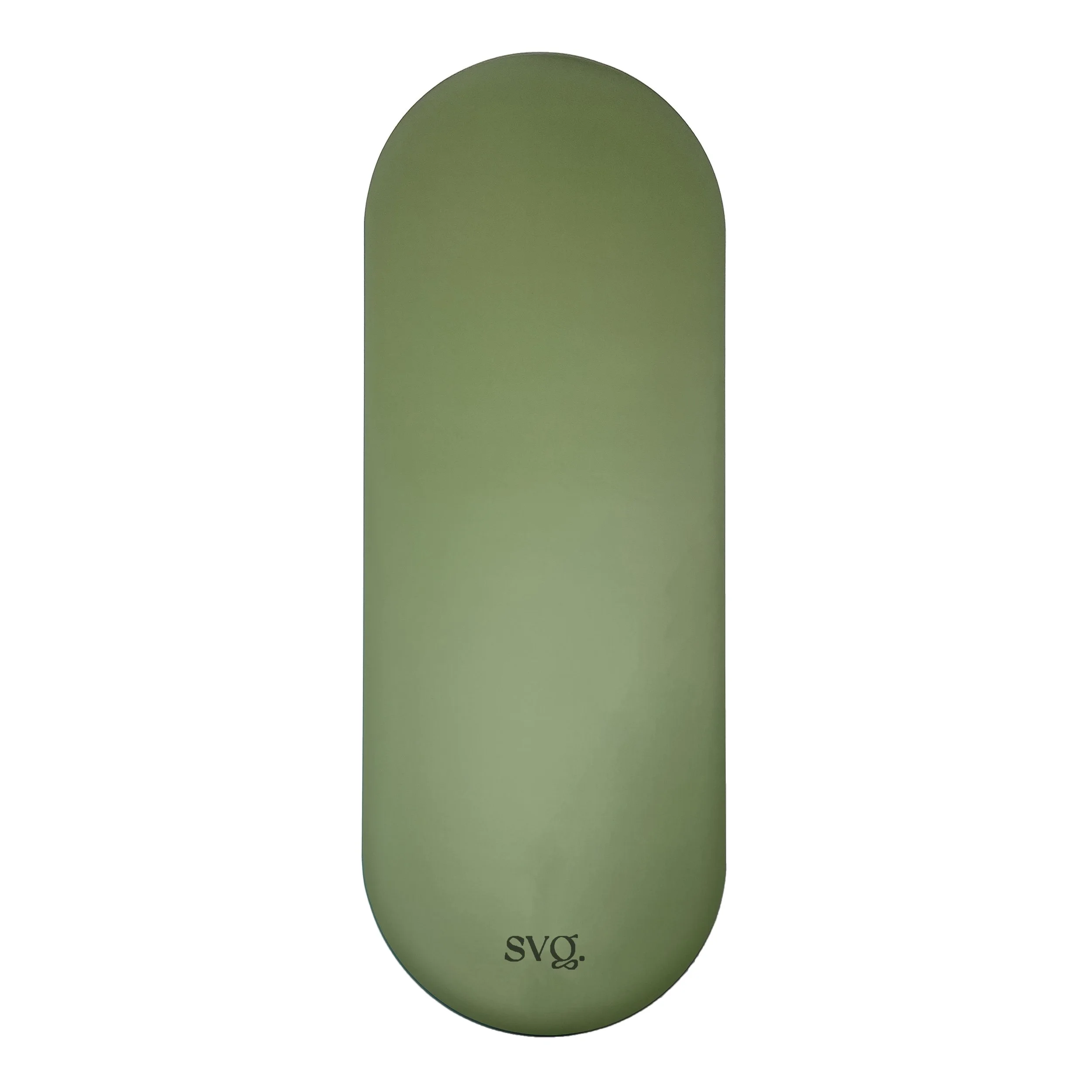
A Wellness Mat Designed for Everyday Rituals
★★★★★ [Best Seller]
Description:
Invite balance and renewal into your practice. The Oliva Verde Cápsula Mat is a calming olive green shade that reflects nature, harmony, and fresh energy. It grounds you in mindfulness while inspiring growth. Designed for yoga, recovery, strength training, and meditation, this premium non-slip mat delivers comfort, stability, and eco-inspired elegance to every practice.
Specs That Matter
Dimensions: 185 cm x 68 cm
Thickness: 4 mm
Weight: 7 lbs
I love the idea of a wellness essential that doesn't need to be packed away as soon as your practice ends. A mat can serve as a visual reminder that you have a space to pause, even when the rest of your day feels full.
You might roll it out for a morning flow, return to it for a few stretches between meetings, or sit on it with your journal before bed. The ritual doesn't have to look the same every time.
Sometimes, making your practice more inviting starts with creating a place you want to return to. Explore the Cápsula Wellness Mat and consider how a dedicated wellness space could support your everyday routine.
2. Make Your Yoga Practice Smaller
Here's your permission slip to stop believing that every yoga session needs to be a full production. Some days, you may have the time and energy for a 60-minute class. Other days, five minutes of stretching might be all that feels accessible. Both can be part of a supportive relationship with movement.
When motivation is low, try creating a few versions of your yoga routine:
Your full practice: A longer class or flow when you have the time and desire.
Your mini practice: Five to ten minutes of gentle movement, a few familiar poses, or a short sequence.
Your soft practice: A comfortable seated position, a restorative pose, or a few moments of quiet breathing.
This gives you options instead of an all-or-nothing choice.
You can also decide that today is a rest day. Rest doesn't have to be earned through productivity, and you don't need to turn every moment of your life into a wellness activity.
The point is to make room for your needs, not create another standard to meet.
3. Connect With Your “Why”
When you first started practicing yoga, what drew you to it?
Maybe you wanted to become stronger or more flexible. Maybe you were looking for a way to manage stress. Perhaps you enjoyed the quiet, wanted to explore mindfulness, or simply felt good after moving your body.
Whatever your reason, reconnecting with it can help you remember why yoga mattered to you in the first place.
Try asking yourself:
How did I want to feel when I began practicing?
What do I appreciate about yoga beyond physical movement?
Which parts of my practice genuinely feel good to me?
What would make yoga feel supportive in this season of my life?
Your answers may have changed over time… and that's okay. Let your reason for practicing evolve alongside you.
4. Track How You Feel, Not Just How Often You Practice
A calendar full of checkmarks can be satisfying, but it doesn't tell the whole story. If tracking your routine motivates you, keep it simple. Just make sure the record supports your well-being rather than becoming a reason to criticize yourself.
Consider keeping a yoga and wellness journal. After a practice, jot down a few words about your experience:
What kind of movement did I do?
How did I feel before and after?
What did I enjoy?
What would I like to adjust next time?
You might notice that a short morning stretch helps you feel more connected to your body, or that an evening restorative practice feels better on particularly demanding days. You may also discover that some practices aren't right for you at certain times. That's useful information.
Instead of measuring success only by the number of sessions completed, use your notes to understand what makes your practice enjoyable and realistic.
Progress can include learning what supports you, not just doing more.
5. Let Your Practice Change With Your Life
A yoga routine that works during a quiet week may not work during exams, a busy season at work, family transitions, or a period when your energy feels different. Rather than assuming you've lost motivation, consider whether your routine needs to be adjusted.
If you usually attend studio classes, but your schedule has become unpredictable, perhaps a short home practice would feel easier. If you enjoy vigorous movement but feel depleted, you might explore gentler stretching or restorative yoga.
You don't need to prove your commitment by maintaining the exact same practice in every season. Consistency doesn't have to mean sameness. It can mean finding your way back in a way that works for you now.
How to Build a Consistent Yoga Routine When You're Busy
If you're ready to make yoga a more regular part of your life, begin with a routine that respects your actual schedule.
Here are four ways to make the process more manageable.
Choose a Realistic Starting Point
Instead of committing to a daily hour-long practice right away, choose a frequency and duration that feel achievable.
You might begin with two short sessions a week and see how that feels. You can always adjust as your needs and preferences become clearer.
Attach Yoga to an Existing Habit
Pair your practice with something you already do. You could stretch after your morning hot water with lemon, practice a few poses after work, or use a gentle sequence as a transition between the day's responsibilities and your evening.
A familiar cue can help reduce the effort of deciding when to begin.
Reduce the Number of Decisions
Choose a few favorite poses or save a short routine you enjoy.
When it's time to practice, you won't have to spend your energy deciding what to do from scratch. You can always explore something new when curiosity strikes.
Make Room for Flexibility
Plan for the week you actually have, not the week you wish you had.
If your schedule changes, adjust your practice without turning the change into a personal failure. A shorter session, a different time, or a rest day can all be reasonable choices. Your routine should be flexible enough to live alongside your life.
Start Your Yoga Practice Again, Without the Guilt
If you've been away from your mat for a while, you don't have to make up for lost time, punish yourself with an intense session, promise that you'll never miss another class, or wait until you feel completely motivated. You can begin where you are.
Whether you have ten minutes for yoga, a few moments to stretch, or simply a desire to create a calmer corner of your home, you can start with what feels right today. You don't have to earn your way back to your practice. You're allowed to begin again, gently.
This Article Has Been Updated.
*Gentle Reminder
This article is here to inspire and inform, but it’s not meant to replace the personalized guidance of a licensed healthcare professional. Your health journey is unique, and we encourage you to consult with a qualified provider for any medical questions or concerns you may have.
At SVG Living, LLC (“svg living”), we share stories, insights, and resources to support women’s well-being. The views expressed here are those of the author and are not medical advice. Mentions of products, services, or practices are shared for informational purposes only and are not official endorsements by svg living.
By engaging with this content, you acknowledge that svg living is not responsible for outcomes related to how the information is used. Always honor your body, trust your instincts, and seek the professional support you deserve.